
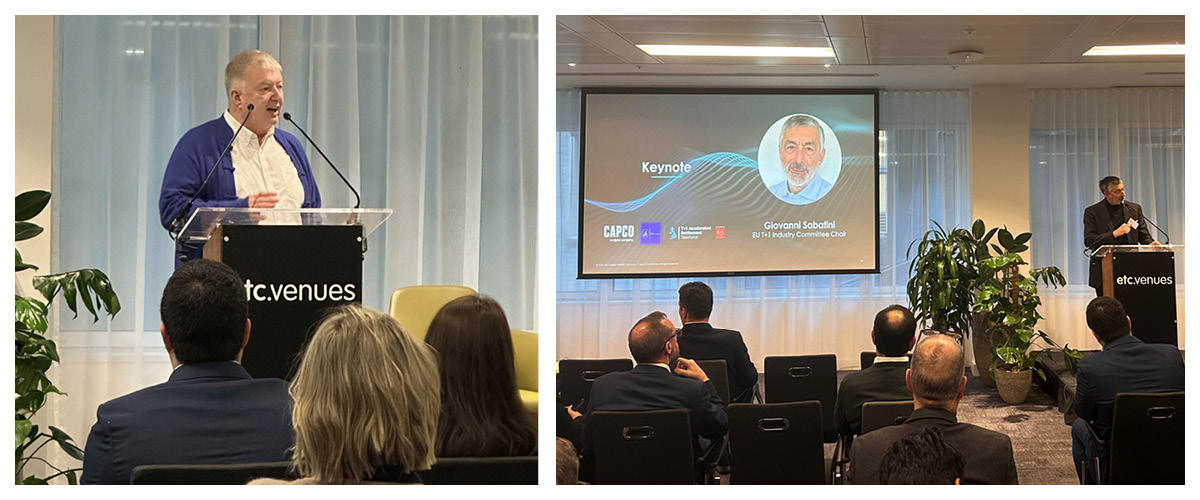
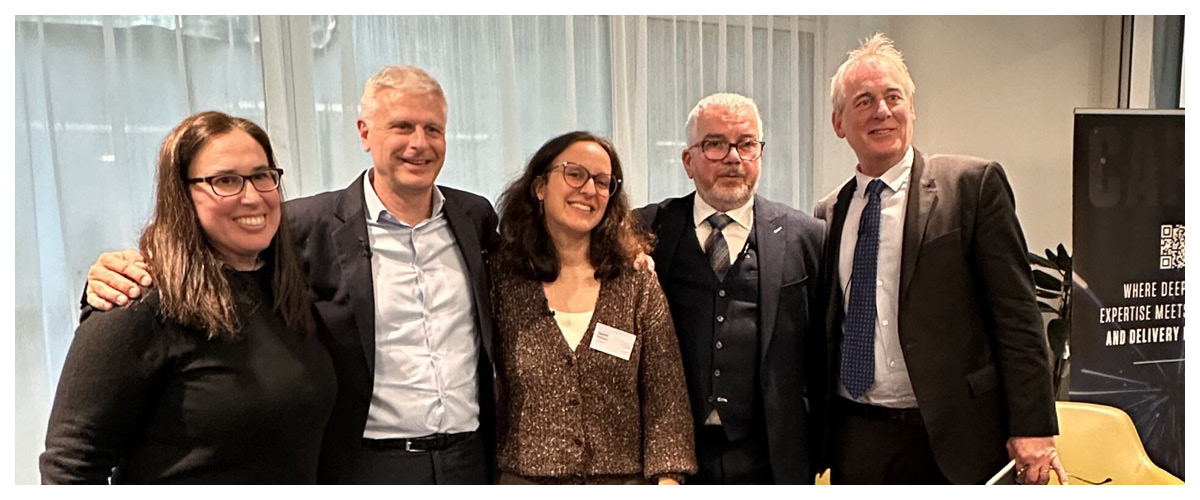

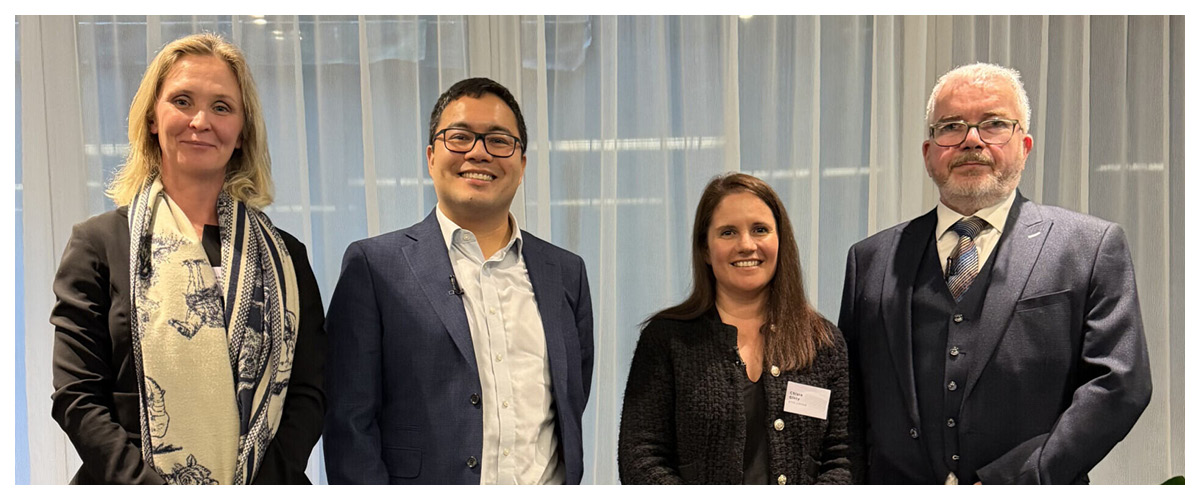


The launch on March 25 of the unified T+1 Testing & Readiness Plan opens a critical new chapter in the transition of UK and European financial markets to next-day settlement, targeted for October 2027. Hosted by Capco in collaboration with the EU T+1 Industry Committee and the UK Accelerated Settlement Taskforce, and supported by Euroclear, the launch event in London reinforced a number of key imperatives: communicate, collaborate, do not underestimate the task at hand – and do not delay your preparations.
Comprising three technical panel sessions alongside keynote addresses by Andrew Douglas, UK T+1 Taskforce Chair, and Giovanni Sabatani, EU T+1 Industry Committee Chair, the event explored key milestones, top priorities and recommended next steps on the industry’s path towards a successful transition.
As Capco Partner Rachael Zukerman noted, while T+1 is often described as a settlement change, in reality, it is much broader:
“This is a fundamental shift in how our industry operates, compressing timelines and driving a tighter level of coordination across the entire trade lifecycle. The challenges cut across the front office, operations, technology, custodians, financial market infrastructures (FMIs) and counterparties. No one solves this in isolation, and that's why the testing strategy is so important. It's not just about system readiness – it's about the end-to-end connectivity across firms, across markets, and under real conditions.”
Below we capture some of the key insights from the afternoon’s keynotes and panel sessions.
Keynotes: “a fundamental shift in how our industry operates”
In his opening keynote, Andrew Douglas was clear: “There is no question of this transition not being a success”:
“We've had independent workstreams that we've thrown together, but this was the first time we had one [joint] workstream and they worked collectively together. Giovanni and I have equivalent fever dreams about a future where the UK and the EU [markets] can work closely together – and I think our project is a fine example of where that is possible when we are all motivated with the same goal.”
As Giovanni Sabatini noted, “pragmatism and flexibility” are a foundational design principle of the plan, which is “built on a shared recognition that our markets are deeply interconnected and that a fragmented approach to testing would have not been effective”:
“We have aimed to provide a coordinated pan-European framework allowing market participants to organize themselves as a part of a single global ecosystem. The task force has also taken particular care to ensure that the plan reflects the needs of the entire settlement chain. The testing taskforce has brought together a broad range of stakeholders – managers, brokers, custodians, FMIs, associations and public authorities – so that the framework is both inclusive and operationally relevant for all the constituencies. We recognize that each firm's testing needs will be different.”
Three key messages underpin the plan:
- Automation is a critical success factor. The move to T+1 requires firms to significantly upscale their processes, reduce manual intervention and operate in a much tighter time frame. Automation of allocation and confirmation processes is essential.
- Firm readiness depends on the readiness of the entire settlement chain. No firm operates in isolation. The ability to settle on T+1depends on the weakest link in the chain from execution through allocation, confirmation instruction and settlement, making coordination and alignment across stakeholders essential.
- Third, and perhaps most importantly: start now. Many testing environments are already available today and firms should not wait for formal testing windows to begin their preparations.
Giovanni Sabatini added that it is important to reinforce what starting now really means:
“T+1 is a transformational project. It is not simply about automating existing processes or complying with regulatory requirements. It requires a fundamental reshape of the post-trade landscape. This transformation is reflected in our more than 30 recommendations outlined in the high-level roadmap, which call for deep operational, technological and behavioral changes across the industry."
“It is equally important to emphasize the need to test and adopt settlement efficiency tools at scale. This plan is not just about testing, but it's about de-risking the transition… and the report provides key metrics and benchmarks that firms can use to assess their readiness, identify gaps, and monitor progress over time.”
His final message was simple: “Start early, automate deeply, test broadly, and work collectively”.
Session 1: “You're losing 80% of your processing time”
On paper, T+1 cuts the settlement timeframe in half – but in real-world terms, the impact is far greater. As Charles Pugh (UK T+1 Testing Workstream, Euroclear UK & International) warned: “You've got to do what you do in two days in basically 20% of the operational time”:
“This is going to affect all of you. You've got to take responsibility for understanding the changes that are happening in your business, and test what you're changing. There will be some things that you're probably not going to change… some things that work. When you look at the metrics, you may be hitting timelines that are commensurate with a T+1 environment. I’m not saying you shouldn't change things in that area but look at the places where you're well behind the curve – because those are the areas that you're going to fall down on when we move to T+1.”
Ivan Nicora (Co-Chair, EU T+1 Testing Workstream, Euroclear SA/NV) underlined the fact that T+1 is a journey involving “about 30 changes across the chain”, and other key milestones will need to be hit before the final October 2027 deadline:
“It's really not about optimizing, it's about reshaping. I'll give you two examples. TARGET2-Securities (T2S) will implement [a] new operational day sometime in mid-June 2027. [Looking] even earlier ESMA made proposals to change the settlement discipline regime which would call for firms to complete their affirmation and confirmation process by 11pm CET. It's fundamentally different, and it happens on December 7, 2026. So anyone working to be ready by October 2027 is taking a substantial risk of missing some of the important matters.”
In this context, a poll of the audience on when individuals expect to have completed automation and systems changes for T+1 underlined there is still significant work to be done: 57% in 2027, 36% in 2026, 5% already done – and 2% in 2028.
James Maher (Global Head of Change and Design, BNP Paribas) highlighted overnight settlements as “a key realignment across markets, a very big change”. As he notes, the overnight settlement cycle in Europe currently starts at T+1 at 8pm CET and runs two consecutive settlement/netting cycles. There is no gap in between, which doesn't allow for settlement messages to be sent to settlement intermediaries. In the future, the first settlement will start at midnight, and then there will be a pause after one hour to allow those settlement messages to be sent:
“Previously, a lot of our settlements were frozen because of a lack of securities that were coming in – for example, for the CCP – so they weren't settling in the nighttime settlement cycle. With this pause that Europe is putting in place, it should allow for much greater settlement overnight – and therefore it's very important that people prepare for this change and start instructing very early for the transversal, the realignments between the different markets.”
The new testing plan comprises several pillars – optimizing internal processes, leveraging FMI capabilities, participating in market-wide testing. Commenting on the importance of the internal testing element, Susan Yavari (Regulatory Policy Advisor - Capital Markets, EFAMA) noted that buy-side firms are “all highly integrated, and if one player in the chain isn't doing the right thing, then there's repercussions beyond that”:
“[There is] a gulf between the larger asset managers who are already highly automated and don't see a lot of issues – maybe a few updates and additional fields that they have to think about – and this other segment, which is highly manual today. They're not necessarily in a position to make decisions about investing and having a matching engine and going for a full-scale automated solution. We need to think about that and have better visibility on how big they are, and how well the manual workarounds will work for them for a certain time until they're able to secure budget.”
In closing, the audience were reminded of the magnitude of the task ahead: “There's a lot of industry work to be done through trade associations, with the custodians, with the sell side and buy side… and there's some very complex testing that still needs to happen.”
Session 2: “An opportunity to automate your processes”
Industry surveys conducted during the past year suggest that, while there is a clear sense that momentum is building around the T+1 initiative, the level of focus and progress across firms remains mixed. Heather Pilley (Technical Specialist, Capital Markets, FCA) said the UK regulator expects firms to be implementing the changes outlined in their project plans this year in order to be able to test how they work next year:
“We will be focusing particularly on small to medium asset managers who may be less ready for the transition… we published a ‘Dear CCO’ letter to those firms to remind them of our expectations. We are going to be taking a more intrusive approach when we go out to talk to our supervised firms. We will be wanting them to demonstrate to us where they are in their preparations – and we are likely to be more concerned than we were last year if we find evidence that they aren't preparing sufficiently.”
Addressing firms who may be behind or have not started their preparations yet, Karole-Anne Sauvet-Frot (Senior Policy Officer, Markets Department & Coordinator of the T+1 project, ESMA) was unequivocal – “start now”:
“Is there something to prioritize? What are the regulatory requirements that apply to you and how will you implement them? Liaise with your counterparties, your clients, your providers [and] challenge them to see what can be done to help you move to T+1 more quickly.”
Data from the US T+1 transition indicates that firm which invested more in automation faced lower long-term operating costs than firms that did not make that investment, relying instead on an increased employee headcount. Boutique firms had less automation, a higher increase in staff costs and an increase rather than a decrease in settlement fails. So the UK and European transitions should be viewed as an opportunity to change – and in particular, automate – processes to enhance their efficiency, the audience heard.
Session 3: “Gap analysis will be key”
Introducing the afternoon’s third and final panel session, Capco Managing Principal Elisabeth Plakinger reiterated that individual firms “have different paths, different dependencies, risks and gaps that we need to address and fully align on”. Clear planning will be critical, and to that end learning from past lessons and establishing a clear picture of progress through key metrics will be key.
JP Morgan’s Alex Chow reflected on his time working for the UK’s Investment Association during the US transition to T+1:
“One of the key questions we probably spent more time than we'd like on is education – trying to understand what affirmation was [and] understanding the ability to perform non-T+1 trades. That education piece is key for the UK and the EU. Most of the recommendations and rules are known [but] you speak to certain buy-side firms [and] they're not going to know. So we really need to work on that education piece as one of the priorities.”
Chiara Ginty (Head of Operations, BTIG Limited) stressed the value of the extensive analysis conducted ahead of the US transition in identifying areas of weaknesses:
“The open conversation and communication that we had with our clients, the fact that we partnered with them [and] also with our clearing and all kinds of partners involved in US T+1 was fundamental for us. An internal analysis, a gap analysis, automation and communication were key factors to ensure a good US T+1 transition.”
That gap analysis should not just be internal, she added. Larger, more sophisticated investors and asset managers may be ready to go live fully tomorrow “but what about the small boutique firms, the small investors, the more manual ones – [and] we also need to look at global investors… for instance, in Asia, in the US”.
Euroclear’s Charles Pugh amplified this inter-dependency point:
“There'll be some cases where you have a settlement agent and you're asking yourself, are you going to test with them? Are you happy they're tested against the market? How satisfied are you that they're ready for T+1? That dependency and reliance goes up the chain. Are you happy the CSD has tested appropriately with the CCP? Even if you don't see any of those tests yourself. So it's about doing that due diligence between entities as well.”
He also reinforced that T+1 impacts will be felt “as soon as the trade is done”. A focus on inefficiencies around standard settlement instructions (SSIs) or ensuring effective allocations are important, but as he notes: “If you haven't got a system that can calculate – ready for tomorrow, in real time – what your funding positions are going to be, and potentially what settlement position is required, then at the very first hurdle you're building up a problem.”
Chiara Ginty noted that US T+1 demonstrated that firms who invested in real-time systems and automation have gained competitive advantage against their peers. Another lesson learned from the US is that firms should review their global footprint where possible:
“They need to look at where the operation teams are based and implement a ‘follow the sun ‘model – although we all know, having been in this industry for so long, that it's easier said than done.”
Alex Chow emphasized there are already steps firms can take internally to improve readiness that are not predicated on broader industry testing, such as adopting auto-partial settlement and looking at timings around allocations, confirmations and sell-in instructions: “These are all things you can either opt into today or you can achieve today.” He then pointed to four specific metrics firms can use to track their readiness for T+1:
- Allocations & confirmation processing
- Settlement instructions (SIs) submissions
- CSD matching rates
- Settlement rates by volume & value
Given the diverse nature of markets and legislation, Chiara Ginty described these metrics as “very powerful”: “It's key for each firm to know where they are against the industry, against their peers and to try, with these numbers, to help themselves overcome the fragmentation and also the daunting [volume] of testing that they think initially they need to do.”
The challenge ahead may indeed be daunting, but the mountain of T+1 will be surmounted. As Capco Partner Rollo Burgess had noted in his opening remarks setting the scene for the afternoon:
“On a summit day you start climbing [the mountain] at about 11 o’clock at night. It's dark and eerie as you're trudging through the night, and it's quite a lonely climb. And then there's a wonderful moment of dawn, when the sun comes up and you can see you're high up on the mountain, high above the clouds. You've still got the most technically difficult, physically demanding, potentially dangerous part of the climb ahead. But you can see your destination, and you can see how far you've come. That's rather like where we're at today – and we're going to push for the top.”

Related content