
Data


Thailand’s virtual banking journey is entering a decisive new phase. In our previous article, Thailand’s virtual banks: banking for everyone, we explored how the country’s first digital-only banks could drive financial inclusion, personalization and everyday convenience – supported by strong regulatory guardrails and a highly digital-savvy customer base.
In June last year, the Bank of Thailand approved three virtual bank applicants, shifting the conversation from ambition to execution. As these institutions move towards operational readiness, with service commencement expected by June 2026 (within one year of initial approvals, subject to meeting regulatory requirements) the focus is now on building scalable operating models, meeting regulatory expectations and delivering differentiated customer value in an already mature digital market.
In this Q&A, Niwat Punanwarakorn, Executive Director, Capco Thailand, shares his perspective on how the market is evolving, where the real shifts are happening – and what will define success in Thailand’s next chapter of digital banking.
Thailand took a significant step towards advancing digital banking last year with three virtual bank applicants approved by the Bank of Thailand (BOT). Since then, what key developments have emerged, and how are market participants progressing towards this phase?
I believe the biggest shift is that Thailand’s virtual banking journey has clearly moved to execution. Following BOT’s approval of three applicants in June 2025 – Ascend Bank, Clix Bank and Bank X – the focus has shifted from “who gets a license” to “who can operationalize a digital bank at scale under regulatory scrutiny”.
Since then, market participants have been moving ahead with entry setup and governance, building out their technology and operating models, strengthening regulatory readiness and control frameworks and refining customer propositions – particularly for underserved retail and SME segments.
At the same time, partnership-led ecosystem building is also accelerating, as players work to deliver end-to-end customer journeys. Ultimately, success will depend not on launch announcements, but on disciplined execution – combining compliance, resilience, data capabilities and customer trust.
From a regulatory perspective, how is the Bank of Thailand shaping expectations around digital banks, and what should institutions be doing now to prepare for the next phase?
The Bank of Thailand has been very clear on one point – virtual banks are not a lighter version of traditional banks. That means the same expectations around safety, governance and customer protection apply, with even more scrutiny on areas like digital risk, cybersecurity and operational resilience
At the same time, the approach is quite balanced. There is a clear push for innovation and financial inclusion, but not at the cost of stability. So, readiness, governance and having a sustainable operating model are not optional – they are fundamental. For institutions preparing now, the focus should not be on branding. It should be on execution readiness.
In practical terms, that means getting a few things right early – clear governance and accountability, a strong risk and compliance setup, resilient core banking and payments infrastructure, robust onboarding and fraud controls and a credible path to sustainable economics.
One area I would particularly call out for Thailand is payments. You cannot build a digital bank without getting payments right. That includes everything from account services and transfers to PromptPay integration, reconciliation, dispute handling and high-availability operations. If you get that wrong, nothing else really works. Payments are the daily trust engine of a digital bank. So work on that, to make everything else work right.
How are incumbent banks in Thailand reassessing their mobile and digital strategies, and where are we seeing the most meaningful shifts?
The biggest shift is that banks are no longer treating digital as a channel upgrade. They are treating it as a full business model redesign – moving towards being more digital-first and increasingly branchless. You can see this across the market. There is more focus on AI, embedded journeys, platform models and ecosystem-driven models rather than standalone banking products.
If I break it down, the real shift is happening in three areas.
First, mobile banking is becoming more contextual, not just transactional. It is moving beyond simple transactions into deeper, more integrated customer journeys – covering areas like financial wellness, credit and ecosystem services.
Second, we’re seeing data and AI move much closer to the front line. They’re being embedded into decision-making, personalization, fraud prevention and service orchestration – not just used for internal productivity.
Third, banks are also rethinking distribution economics. The focus is shifting towards reducing cost-to-serve, increasing relevance and embedding themselves more deeply into customers’ everyday digital ecosystems.
That is where virtual banks are creating pressure. Not because they will replace incumbents overnight, but because they are forcing them to simplify, modernize and sharpen their value proposition.
Given global challenges around profitability for digital banks, what business models or use cases are most likely to succeed in Thailand’s market?
Thailand’s winning model will not be based on growth for growth’s sake. It will be driven by disciplined customer acquisition, strong daily engagement and sound risk management.
Digital banks will need to become part of the customer’s every day journey – building services that are relevant by segment and designed around real needs. The more they can deliver end-to-end solutions, the stronger their chances of success. Over time, this will also expand from local to more regional and cross-border opportunities.
In this market, I see four promising models.
First, everyday transaction-led banking. Banks that win current account primacy and drive payments activity and recurring engagement will have a structural advantage. In Thailand, this means payments, transfers, bill payments, top-ups, merchant acceptance and ecosystem-linked daily use cases.
Second, underserved retail and SME propositions. This is closely aligned with the regulator’s intent. There is still a significant opportunity to serve thin-file customers, informal-income segments, emerging merchants, gig workers and smaller SMEs through better data, simpler journeys and faster decision-making.
Third, ecosystem-anchored distribution. What we are seeing from the approved consortia is a deliberate combination of telecom, platform, payments and retail capabilities with digital banking expertise. This reflects a broader shift – embedding financial services into existing ecosystems rather than building demand from scratch.
Fourth, low-friction, low-cost servicing with better risk selection. Profitability will depend less on customer volumes and more on unit economics – acquisition cost, activation, engagement, fraud loss, credit loss and service cost. The strongest players will be those that industrialize operations and make better decisions earlier in the customer lifecycle.
At the same time, I would be cautious about models that rely too heavily on aggressive unsecured lending without differentiated underwriting, or on cashback-led acquisition that is difficult to sustain. The market is competitive, regulation is rigorous and trust remains critical. Sustainable digital banking in Thailand will need to balance inclusion with discipline.
Looking ahead to the next 6–12 months, what key developments should we expect in Thailand’s virtual banking journey, and what actions should banks and new entrants prioritize now?
Over the next 6–12 months, I would expect five key developments.
First, the approved groups will continue moving through incorporation, operating model setup and readiness execution, with launch timelines anchored to the one-year window from June 2025. There is still a significant amount of work required – from meeting BOT testing criteria to ensuring their ecosystems are ready to support a full “bank-as-a-service” model from account opening through to day-to-day operations.
Second, we will see sharper articulation of customer propositions – particularly around underserved retail and SME segments – where policy intent and market opportunity clearly overlap. Some use cases that may not have scaled well within traditional banks could be rethought and built through virtual banks.
Third, technology and control build-out will accelerate across key areas such as onboarding, fraud, cybersecurity, cloud and infrastructure resilience, service continuity, payment connectivity and data architecture.
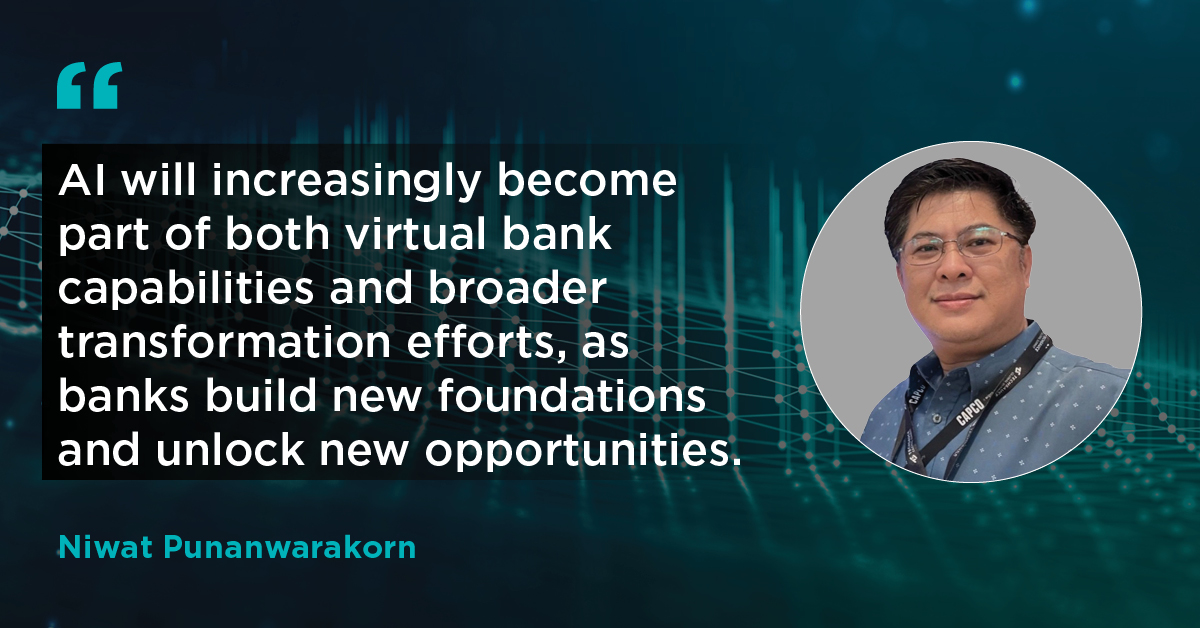
Fourth, incumbent banks will continue accelerating their own digital and AI programs, rather than waiting for virtual banks to launch. We are already seeing signals of this direction. AI, in particular, will increasingly become part of both virtual bank capabilities and broader transformation efforts, as banks build new foundations and unlock new opportunities.
Lastly, the market will become more pragmatic. The focus will shift from excitement around licensing to evidence of execution quality. We are also likely to see younger, digital-native customers showing stronger interest in these new banking models.
For both banks and new entrants, the priorities now need to be practical. This includes defining a clear, segment-led proposition, building payments and core processing foundations properly and designing for operational resilience from day one. It also means embedding risk, fraud, compliance and fair customer treatment into product design from the outset – not as an afterthought. At the same time, institutions need to be realistic about economics and their scaling path, while ensuring alignment across business, product, technology and operations behind a single execution plan.
Any final thoughts on the opportunities ahead?
Thailand is entering an important and healthy phase in its digital banking journey. The opportunity is real – but this next chapter will reward institutions that can turn vision into operating reality.
The focus now should not just be on launching a virtual bank, but on building one that is trusted, resilient and commercially viable. That goes beyond a strong mobile interface. It requires the right combination of strategy, payments architecture, digital operating model, regulatory readiness and execution discipline.
More importantly, this is a chance for the market to do something meaningful – not just create more banks, but deliver better outcomes for customers, SMEs and the broader Thai financial ecosystem. There is real opportunity here – for those who get the fundamentals right.
To find out more about working with Capco and how we can help you overcome any potential challenges, contact our experts or subscribe for the latest insights below.


