As artificial intelligence transitions from a predictive engine to an autonomous decision-maker, it challenges the foundations of how organizations govern their systems, data and outcomes. In the emerging era of autonomous enterprises, governance can no longer be a gatekeeper applied after the fact. It must become an embedded capability, enforcing compliance, ethics and transparency in the flow of decisions – without slowing innovation.
Governance today is designed for control, not autonomy. Most enterprises operate under governance frameworks that evolved in a pre-AI world where decision-making was human-centric, processes were deterministic and systems were largely static. Governance in this model has three defining characteristics.
Periodic and reactive. Reviews, audits, and approvals are conducted at defined intervals e.g., quarterly controls, annual certifications, or post-incident investigations.
Manual and siloed. Compliance functions operate separately from engineering and data teams, often relying on documentation rather than automation.
Rule-based, not context-aware. Policies are written for specific processes or datasets, with limited ability to adapt to dynamic, data-driven environments.
This approach was sufficient when humans remained the final arbiters of critical business decisions. But AI systems, especially autonomous agents operate continuously, learn adaptively, and make decisions faster than human oversight can respond.
Traditional governance frameworks struggle in this new reality for several reasons:
- Lack of real-time visibility – by the time an issue is detected, an AI model may have already made thousands of decisions
- Opaque reasoning – AI agents often operate as black boxes, making it difficult to trace the ‘why’ behind an outcome
- Static policy enforcement – rules written for fixed workflows cannot adapt to dynamic contexts where AI actions evolve with data and feedback loops
- Ambiguity of policy interpretation – policies are written in natural language and often interpreted differently across teams, which creates inconsistency in how rules are applied, leading to variable controls and uneven compliance.
In effect, most governance today is retrospective, explaining what happened after the fact. AI demands prospective governance – controls that operate in real time and inside workflows while decisions are being made.
AI introduces a fundamental shift in accountability. When machines learn, reason, and act on behalf of humans, the traditional chain of responsibility becomes diffuse. Who is accountable for a decision made by an algorithm that continuously evolves?
To address this, governance must move from being an external mechanism that monitors compliance to an internal, embedded fabric woven into the models, workflows, and data infrastructure that power intelligent systems.
This is not about adding more oversight layers, but rather about rearchitecting governance itself. Think of it as a control plane for AI: always-on governance that ensure automated decisions aligns with policy, ethics and regulation with evidence captured by default, not assembled later.
The new building blocks of AI-era governance
Transitioning from traditional to embedded governance requires re-imagining its core components. Several new building blocks are emerging as critical to uplift governance capabilities in AI systems.
Policy as Code
Perhaps the most transformative concept, Policy as Code (PaC) turns governance principles into executable logic. Instead of policy documents stored in PDFs or spreadsheets, machine-readable rules are directly embedded into data pipelines, APIs and model operations.
A key distinction needs to be recognized: where policies define intent and boundaries for the agents to work under, rules implement them as deterministic conditions. In highly regulated scenarios, some policies may be expressed as strict rules but most should remain outcome-focused guardrails. For example:
- A ‘fairness’ policy could automatically trigger re-balancing of training datasets when demographic bias thresholds are breached
- A ‘market exposure’ limit could be enforced in real time by the trading algorithm itself, halting trades once risk tolerance is exceeded.
This automation ensures policies are not just guidelines but active constraints that operate at machine speed consistently across different teams in the organisation.
Dynamic context awareness
AI systems require governance that adapts to context. Consider an autonomous risk-assessment agent operating across a bank’s lending portfolio. When evaluating a high-value corporate credit decision, the model must apply stringent explainability, stress-testing and regulatory justification requirements. However, when performing a real-time credit limit adjustment on a low-risk retail account, the thresholds for documentation and interpretability may be lighter.
By embedding semantic metadata and contextual ontologies, governance can interpret the scenario automatically, understanding the product type, customer segment, risk exposure, and regulatory obligations. It can adjust the level of oversight, controls, and evidence capture in real time enabling proportional governance without sacrificing safety or agility.
Continuous assurance
Models are built to capture rich telemetry data that helps track input distributions, performance indicators, drift signatures and fairness metrics. AI-driven monitoring agents analyse these signals continuously, identifying subtle shifts such as emerging bias, deteriorating accuracy, abnormal decision clusters or deviations from approved policy parameters.
When issues are detected, the system can automatically trigger tiered responses varying from alerting model owners and initiating targeted reviews, to activating controlled fail-safes or launching self-correction workflows such as automated retraining or rule recalibration.
This shifts governance from periodic audit and review to continuous detection and response, identifying drift, bias, and anomalous decisions patterns early and triggering tiered actions before they become incidents.
Explainability and transparency by design
As models become more complex, transparency must be engineered, not inferred. One key attribute to enable this is to provide end-to-end visibility across both data and decisions.
Full data lineage and provenance create a verifiable chain from data origin through transformation to model training, forming the audit backbone regulators rely on. Layered on top, explainability frameworks should document not just what a model decided but why capturing input variables, decision paths, and rationale.
Together, these capabilities deliver traceable, interpretable AI outcomes that strengthen regulatory assurance and user confidence. Practically, this requires lineage and provenance to be treated as first-class architecture artefacts not documentation produced during audit cycles.
Establishing a reference architecture
The governance layer acts as a shared platform layer that sits above data, models, and applications. Its role is to convert policies and metadata into runtime decisions and durable evidence.
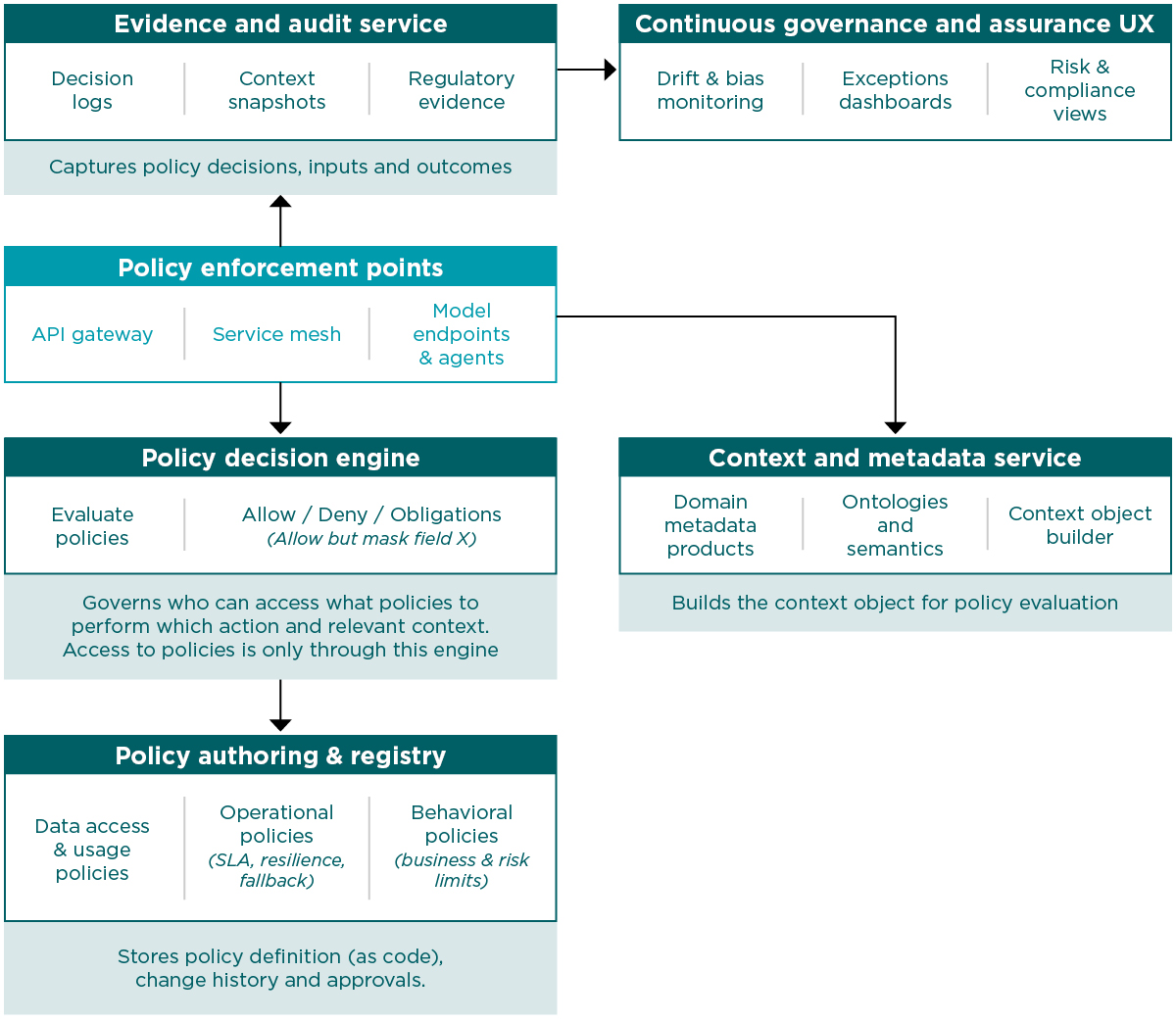
Figure 1: Reference Architecture: Embedded Governance in an Enterprise
Figure 1 sets out the reference architecture that can be used to deliver embedded governance in an enterprise. Below, we run through the key elements.
Policy Authoring & Registry. A central service for defining, reviewing, versioning, and publishing policies as code. Policies are treated as first-class artefacts with owners, lifecycle states, and audit history. Governance policies are organised into families, each addressing a distinct risk and control domain. Some of the examples include:
- Data access and usage policies – these will control who can access which data, for what purpose and under what conditions
- Behavioural policies – these will constrain real-time decisions and agent behaviour; for example, one trade should not impact the risk profile of the investment portfolio of a customer
- Operational policies – these will define fail-safe behaviour when dependencies degrade; examples include agent behaviour on a customer facing website when a credit check is delayed and the customer cannot be made to wait.
Policy Decision Engine (PDE). A stateless evaluation engine that receives a decision request (subject, resource, action, context) and returns an allow/deny decision with optional obligations such as logging, masking, throttling, or human review.
Policy Enforcement Points (PEPs). Lightweight adapters embedded across the runtime landscape like data pipelines, API gateways, model endpoints and agent orchestrators. PEPs invoke the PDE and enforce outcomes locally.
- Context & metadata service – builds the full decision context by enriching requests with metadata from domain-owned metadata products and semantic models.
- Evidence & audit service – captures policy decisions, inputs, context, and enforcement outcomes to provide a defensible audit trail and support continuous assurance.
- Governance UX & workflow – provides dashboards and workflows for policy lifecycle management, exception handling, risk oversight, and regulatory reporting.
This governance architecture facilitates a seamless, end-to-end flow.
- A request is initiated by an application, pipeline or agent through one of the policy end points (PEP) and calls the context service.
- The Context Service enriches the request using metadata products and semantic relationships.
- PEP then invokes the Policy Decision Engine (PDE) with the enriched context.
- The PDE evaluates relevant policy families and returns decisions and obligations.
- Obligations are enforced locally and evidence is recorded centrally.
- Telemetry feeds continuous assurance dashboards and regulatory reporting.
Enabling trusted autonomy at enterprise scale
The transition to embedded, machine-speed governance fundamentally reshapes how organisations operate in the age of autonomy.
Rather than functioning as a retrospective control mechanism, governance becomes a strategic enabler allowing intelligent systems to make decisions independently while ensuring that transparency, accountability, and compliance remain intact. The result is an operating model where autonomy and assurance scale together, creating a foundation of trust that accelerates business transformation. Below listed are some key outcomes achieved by codifying governance.
Scalable autonomy with assured control
Embedded governance empowers organisations to expand their use of autonomous systems without proportionally increasing risk. Decision authority can be safely delegated to the point of action through codified guardrails, with policies, thresholds and constraints expressed as executable logic embedded within data pipelines and model operations.
These digital controls ensure that AI agents operate within defined ethical and regulatory boundaries while enabling rapid execution at machine speed. Continuous telemetry and intelligent feedback loops provide real-time visibility into model behaviour, surfacing anomalies or emerging risks long before they become incidents. Each decision carries its own traceable lineage and rationale, enabling immediate accountability and drastically reducing reliance on retrospective audits.
Governance as a differentiator of trust and market confidence
By re-engineering governance as an automated and proactive capability, organisations convert trust into a competitive asset. Regulators gain greater confidence through continuous assurance, supported by real-time monitoring and self-enforcing controls that demonstrate ongoing compliance rather than periodic snapshots.
Customers benefit from transparent, explainable AI outcomes whether in lending decisions, trading activities, or personalised recommendations, building confidence in automated interactions and strengthening loyalty. Internally, automated compliance frees teams from manual oversight burdens, unlocking greater capacity for experimentation, product development, and innovation at scale.
Trust by design as a core architectural principle
Ultimately, embedded governance creates an architectural foundation where trust is not bolted on after deployment but engineered into every layer of the AI ecosystem. Policies become machine-actionable, assurance mechanisms operate continuously, and explainability is woven into workflows and decision processes.
As models evolve, governance evolves with them, ensuring that oversight keeps pace with learning systems. This results in autonomous capabilities that are consistently safe, transparent, and accountable – providing organisations with a blueprint for deploying AI responsibly at scale. Those who adopt this approach early position themselves to lead the next era of digital transformation with systems that are both powerful and trustworthy by design.
Governance in the age of autonomy demands a mindset shift from control after the fact to trust by design. It is no longer a defensive function, but an architectural principle woven into the very fabric of AI systems. Autonomous systems are inevitable but trusted autonomy is a choice.
The future of governance lies not in slowing down AI, but in enabling it to move safely, transparently and accountably.