
Regulation


As discussed in part 1 of this series, European authorities are progressively reassessing how the prudential framework can be made more efficient without weakening supervisory standards. Supervisory reporting is a key component of this agenda, as it sits at the intersection of regulatory compliance, supervisory effectiveness and implementation costs.
The European Banking Association’s (EBA) consultation on supervisory reporting illustrates how this simplification agenda is being translated into practice.1 Beyond implementing new regulatory requirements such as CRR3 (Capital Requirements Regulation), IFRS 18 (International Financial Reporting Standards) and ESG (environmental, social, governance) reporting, the consultation seeks to streamline existing reporting obligations, strengthen proportionality and improve the consistency and reuse of supervisory data.
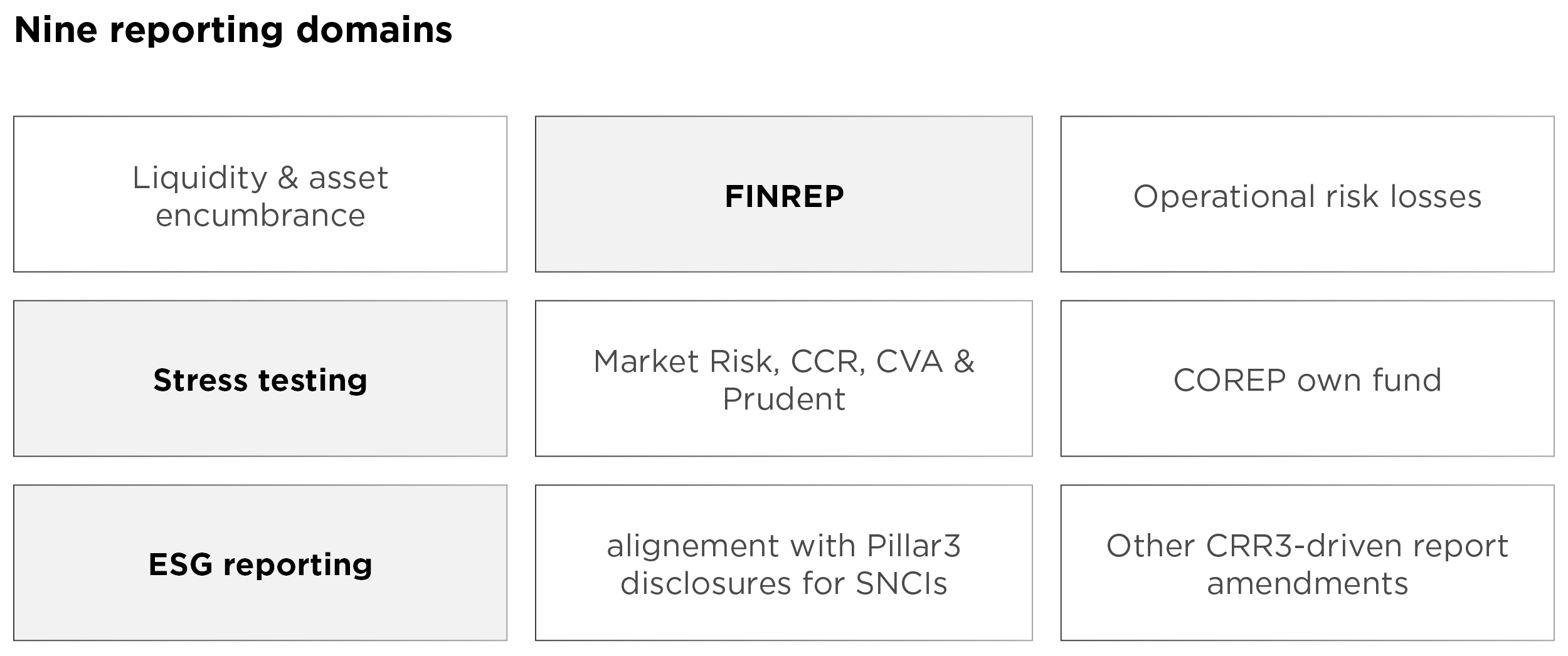
While the consultation covers nine reporting domains, this article focuses on ESG reporting, stress testing and FINREP (financial reporting standards), as these three modules best illustrate the direction of travel of the EBA's reporting reform and are likely to have the greatest operational impact on banks.
The consultation represents the EBA's most comprehensive review of the supervisory reporting framework in more than 15 years. It brings together one overarching consultation paper and nine topic-specific modules, combining regulatory-driven changes with a broad simplification agenda. The revised framework is expected to apply from the 30 September 2027 reporting reference date.
The package pursues two complementary objectives. On the one hand, it incorporates new regulatory requirements stemming from CRR3, IFRS 18, ESG reporting and the future implementation of the FRTB (Fundamental Review of the Trading Book). On the other hand, it seeks to reduce reporting costs by removing low-value templates and data points, strengthening proportionality for smaller institutions, improving data reuse and integrating selected ad hoc collections into regular supervisory reporting.
The consultation is structured around the following nine reporting domains:
While each module addresses a specific reporting domain, this article highlights ESG reporting, stress testing and FINREP, as these areas are likely to have the greatest impact on institutions' reporting frameworks, data architecture and operating models. In particular, the proposed integration of stress-testing data into supervisory reporting could reduce dedicated stress-testing data collections by approximately 55%, illustrating the EBA's broader objective of simplifying reporting while preserving supervisory effectiveness.
The ESG module represents one of the most significant structural changes introduced by the consultation. Until now, ESG information has primarily been collected through an ad hoc supervisory exercise applicable to large, listed institutions, using templates closely aligned with the Pillar 3 ESG disclosure framework.
EBA now proposes replacing this temporary collection with a permanent supervisory reporting framework under the ITS (Implementing Technical Standards). Rather than extending the existing exercise, the new framework introduces a proportionate approach, broadens the scope of institutions covered and simplifies the reporting package by removing information that is considered to provide limited supervisory value.
Beyond introducing new reporting requirements, the consultation reflects a broader shift in supervisory philosophy: ESG information is progressively moving from a disclosure-focused exercise towards a permanent prudential reporting framework supporting supervisory monitoring of climate and environmental risks.
A proportionate supervisory reporting framework
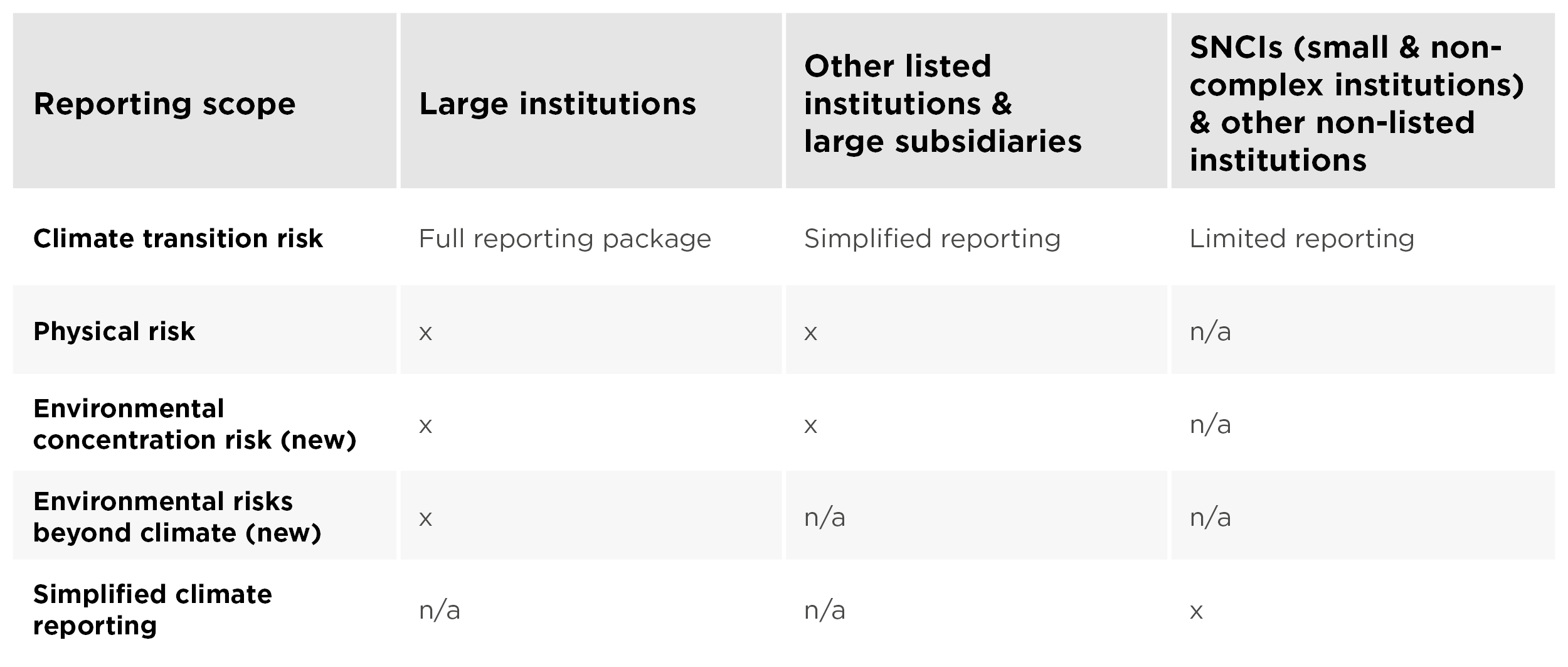
One of the key simplification principles introduced by the consultation is proportionality. Rather than applying the same reporting requirements across the banking sector, the EBA proposes differentiated reporting packages based on the size and complexity of institutions.
This tiered approach illustrates how the EBA intends to expand ESG supervisory reporting while keeping reporting obligations proportionate to institutions' size, complexity and risk profile.
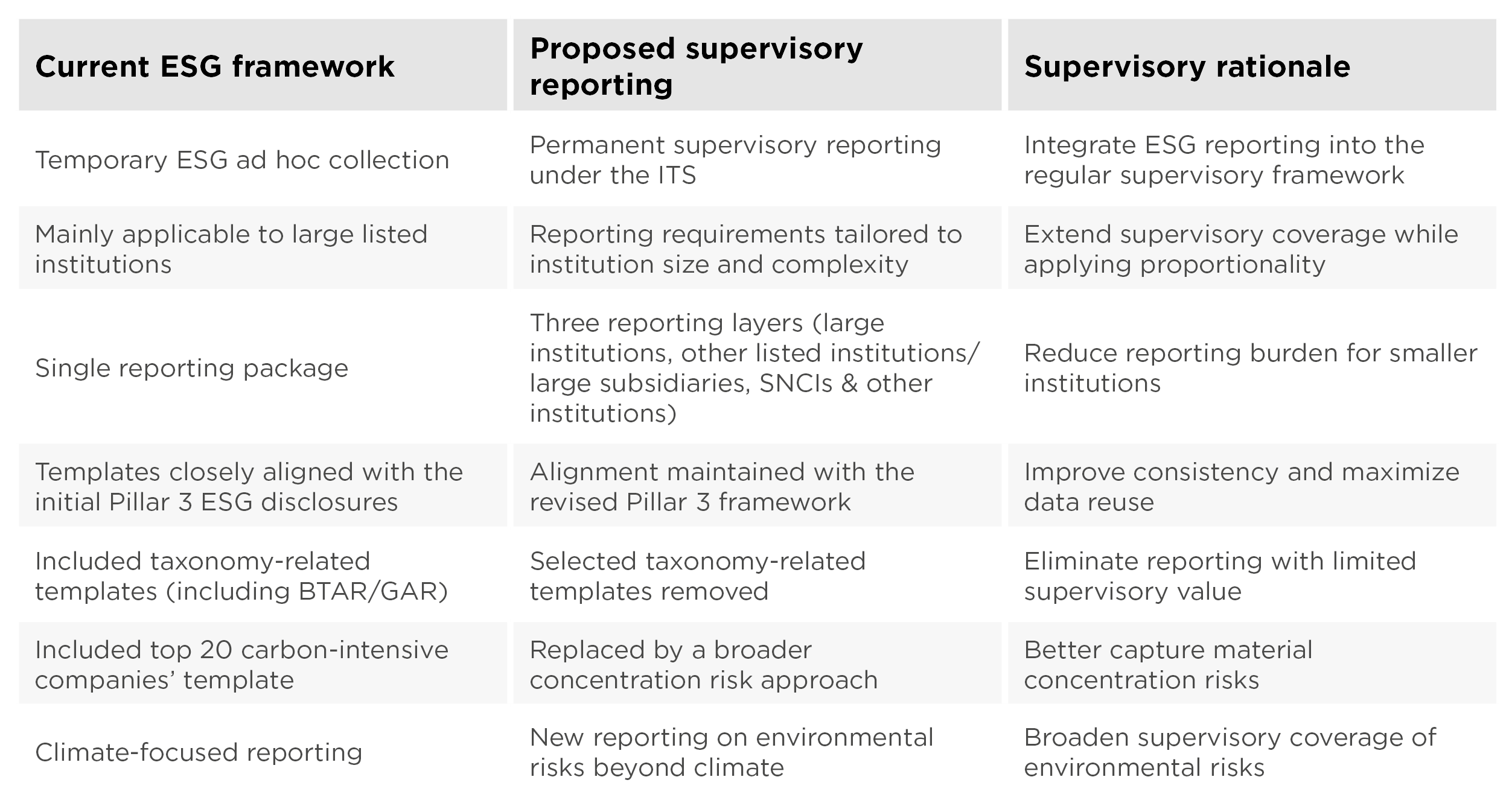
How is the framework evolving?
The proposed framework builds on the existing ESG ad hoc collection while introducing targeted simplification measures and new supervisory priorities.
What is changing?
The new framework combines the formalisation of ESG supervisory reporting with targeted simplification of the existing ad hoc collection. The most significant changes include:
Taken together, these changes illustrate the EBA's approach to simplification: moving ESG reporting into the permanent supervisory framework while applying proportionality, removing lower-value requirements and introducing targeted information where supervisory gaps remain
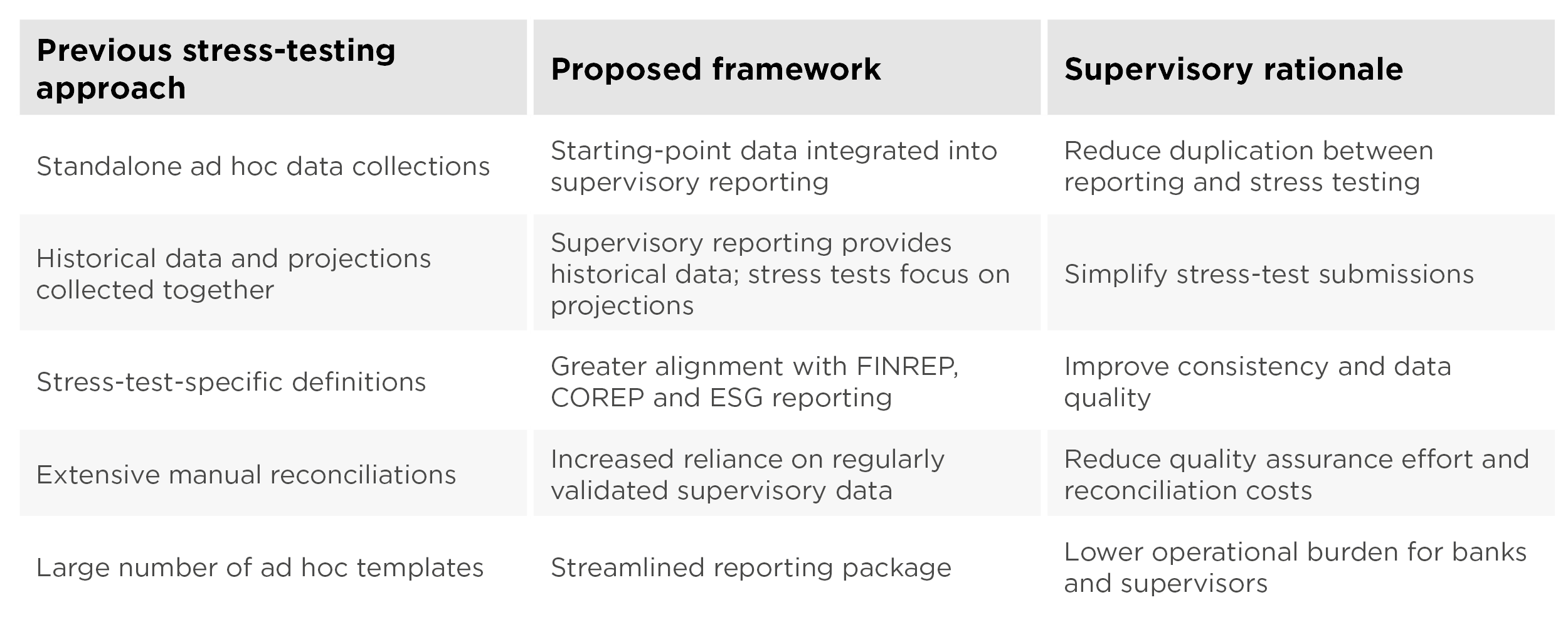
The stress testing module represents one of the most significant operational changes within the consultation package. Historically, EU-wide stress tests relied on dedicated ad hoc data collections combining historical starting points, supervisory calculations and forward-looking projections in a single reporting exercise.
The EBA now proposes a different approach. Rather than collecting the same information through dedicated stress test templates, it intends to integrate most starting-point data into regular supervisory reporting (FINREP, COREP (common reporting) and ESG reporting). Future stress-testing exercises would therefore focus primarily on forward-looking projections, while historical data would increasingly come directly from supervisory reporting.
This evolution reflects the EBA's broader objective of reducing duplication, improving data reuse and strengthening consistency across supervisory processes.
How is the framework evolving?
What is changing?
The proposed integration requires targeted amendments to several supervisory reporting frameworks.
The most notable changes include:
Together, these changes allow stress-testing exercises to rely increasingly on supervisory reporting data instead of dedicated ad hoc collections.
According to the EBA, this approach could reduce stress-testing data requirements by approximately 55% compared to the 2025 exercise.
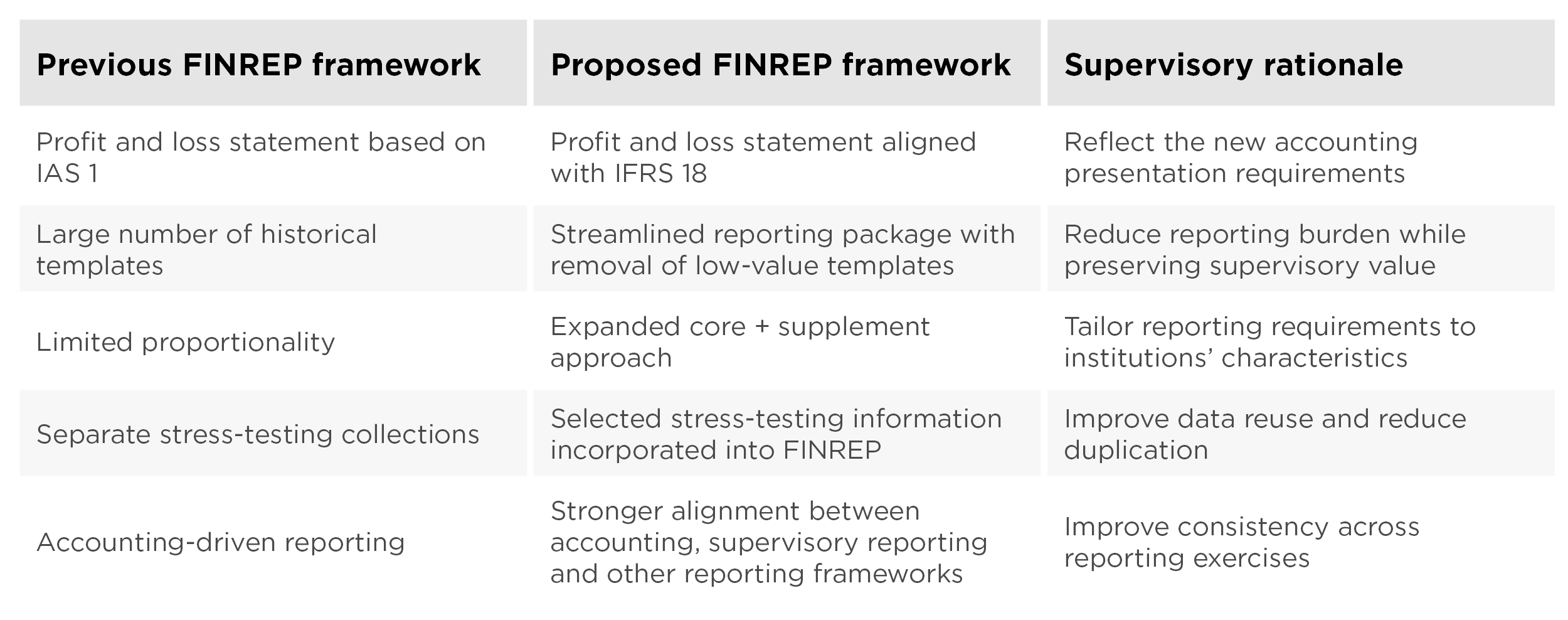
The FINREP module is primarily driven by the implementation of IFRS 18 – Presentation and Disclosure in Financial Statements, which introduces a new structure for the statement of profit or loss and requires corresponding amendments to supervisory reporting. However, the consultation goes well beyond accounting alignment. It also represents one of the most comprehensive reviews of the FINREP framework since its introduction, using IFRS 18 as an opportunity to simplify, rationalize and modernize existing reporting requirements
Rather than simply introducing new accounting requirements, the EBA is reassessing whether existing FINREP templates continue to provide sufficient supervisory value relative to the implementation effort they require from institutions. This reflects the broader simplification agenda underpinning the entire consultation package.
How is the FINREP framework evolving?
What is changing?
Beyond the redesign of the statement of profit or loss, the consultation introduces several structural changes to FINREP.
The most significant developments include:
Rather than adding reporting indiscriminately, the EBA is seeking to offset new regulatory requirements by removing obsolete or duplicative information wherever possible.
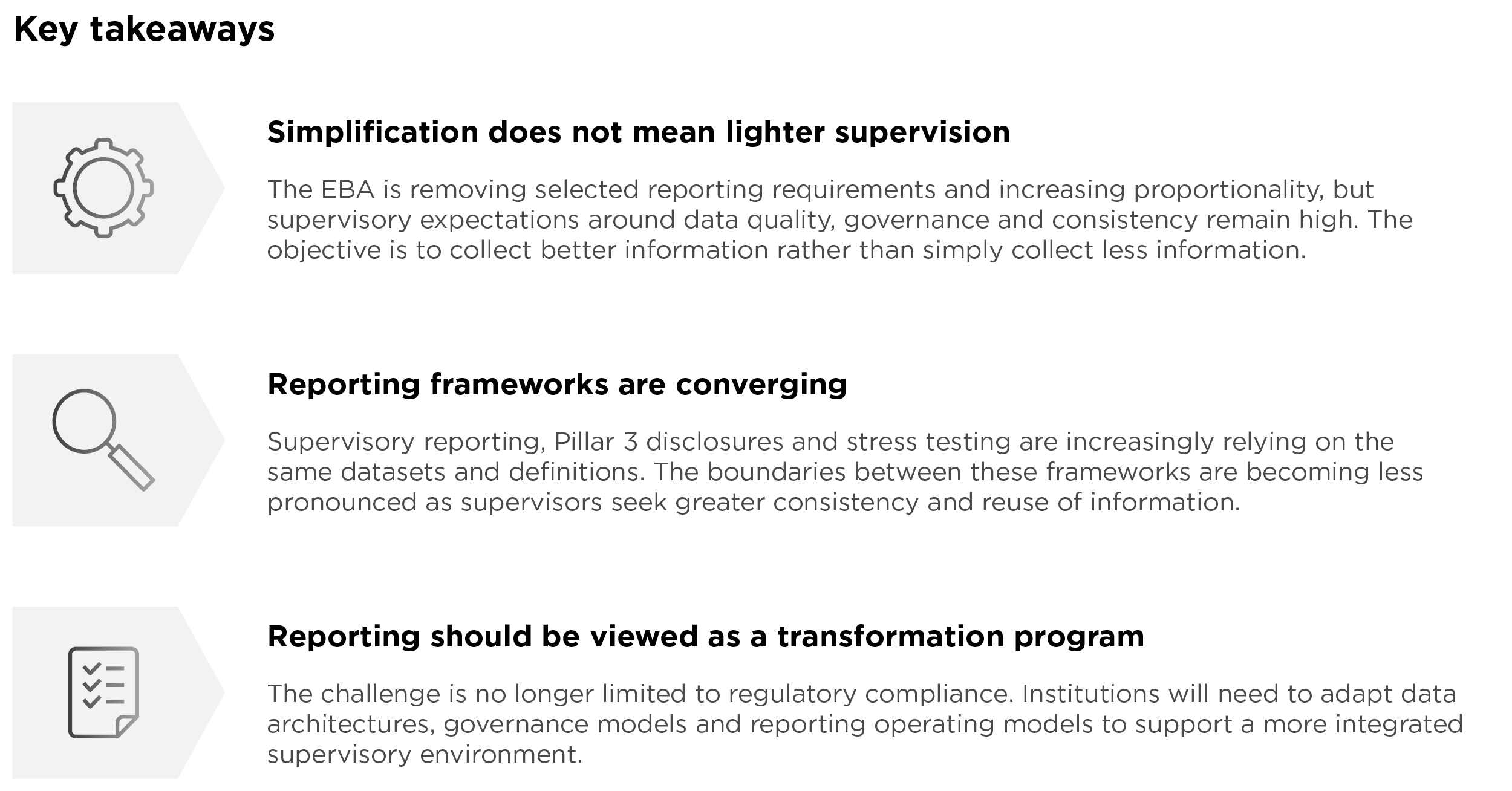
Although the three focus areas address different aspects of supervisory reporting, they point towards a common transformation agenda.
First, institutions will increasingly be expected to produce high-quality data that can be reused across multiple supervisory processes, including reporting, disclosures and stress testing. This reinforces the importance of integrated data governance and consistent reporting architectures.
Second, simplification should not be interpreted as a reduction in implementation effort. While the EBA proposes removing selected reporting requirements and strengthening proportionality, institutions will still need to adapt operating models, accounting mappings and reporting processes to support the revised framework.
Finally, the consultation reinforces the need for closer collaboration between Risk, Finance, Sustainability and Regulatory Reporting functions. The ability to manage these disciplines through a common data foundation is likely to become a key differentiator as supervisory reporting continues to evolve.
The challenge created by this consultation is not simply the implementation of new reporting requirements. It is the need to manage the increasing convergence between reporting, disclosures, ESG data and stress testing while maintaining consistency across Risk, Finance and Sustainability functions.
Capco supports institutions in translating these regulatory developments into coherent implementation roadmaps. By combining prudential expertise, reporting transformation capabilities and data architecture experience. We help banks simplify reporting processes, strengthen data foundations and improve supervisory readiness while aligning regulatory change with broader transformation objectives.
Contact us to discuss how we can help you on this journey.
This article is based on the EBA Consultation Paper on Revisions to the ITS on Supervisory Reporting (EBA/CP/2026/07), including the related consultation modules on ESG Reporting, Stress Testing and FINREP. The proposals remain subject to consultation and do not represent final EBA policy or binding regulatory requirements.
References
1 Implementing Technical Standards on supervisory reporting (simplification package) | European Banking Authority
To find out more about working with Capco and how we can help you overcome any potential challenges, contact our experts or subscribe for the latest insights below.

