Broker-dealers across Asia-Pacific are under mounting pressure to reduce operating costs while continuing to invest in resilience, scalability and innovation. Firms are accordingly re-evaluating their operating models to lower total cost of ownership, modernize technology infrastructure and streamline workforce structures. However, delivering sustainable cost reduction remains challenging.
Many institutions continue to operate in complex environments shaped by years of incremental change, including fragmented systems, legacy infrastructure and manual processes across the trade lifecycle. This is further compounded by market structure changes such as accelerated settlement cycles (e.g. T+1), increasing trade volumes and cross-border regulatory requirements, all of which continue to add operational complexity.
This is especially evident in post-trade operations, where reconciliation, exception management and settlement processes remain highly manual across certain asset classes. In addition, fragmented data architectures and inconsistent data models limit firms’ ability to fully leverage modernization initiatives, creating inefficiencies and constraining scalability.
In this article, we explore five key opportunities for transformation and outline practical recommendations for delivering sustainable cost transformation.
Why is cost takeout such an imperative for broker-dealers?
Rising technology investments, regulatory demands and operational complexity are increasing cost pressures, while firms must continue investing in modernization and innovation to remain competitive. Increasing regulatory complexity – particularly across jurisdictions, is a growing cost driver, with firms often implementing similar regulatory changes multiple times in a fragmented, market-by-market manner. Therefore, cost takeout has become a strategic priority for capital market firms.
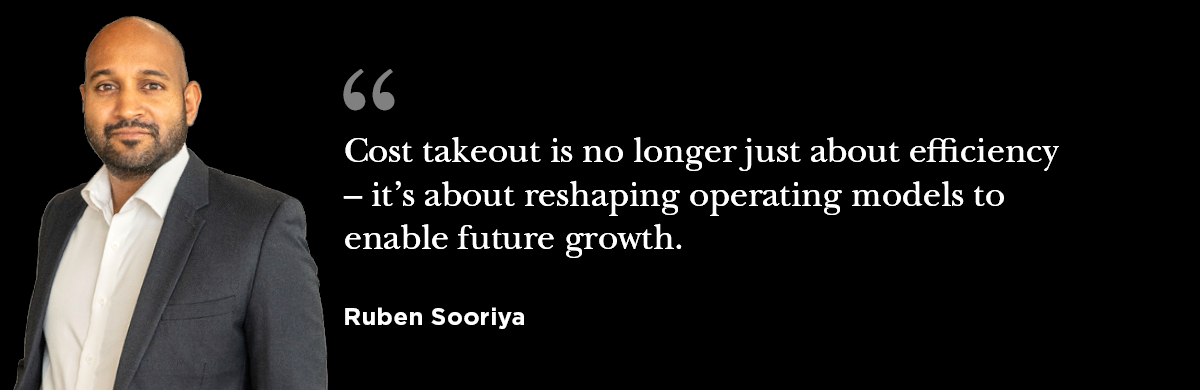
This creates a dual mandate: reduce operating costs while funding future growth and transformation. A structured cost takeout strategy enables firms to move beyond short-term savings and address structural cost drivers across the trade lifecycle. By simplifying operating models and modernizing technology infrastructure, market participants can improve scalability, enhance resilience and create capacity for future investment.
Challenges broker-dealers face in achieving sustainable cost transformation
Several structural factors continue to drive operational costs across financial organizations, limiting scalability and increasing complexity. Below we set out the key areas of challenge – and opportunity.
1. Technology and infrastructure rationalization
A significant portion of operational costs in broker-dealer environments stems from fragmented technology estates and duplicative infrastructure. Many firms still operate multiple platforms across asset classes and trade lifecycle stages, creating inefficiencies and increasing maintenance costs.
This is particularly evident in functions such as treasury and payments, where industry-wide simplification initiatives and standardized platforms are enabling firms to consolidate systems and build stronger internal business cases for rationalization.
Rationalizing these platforms, reducing redundancy, consolidating systems and standardizing infrastructure offers immediate cost savings while improving operational agility. By simplifying the technology landscape, firms can also accelerate innovation and reduce operational risk.
2. Legacy modernization and cloud migration
Legacy systems, particularly mainframe-based applications, continue to drive high infrastructure and data center costs. As a result, organizations are prioritizing modernization initiatives, with a strong shift towards cloud-centric operating models, especially for post-trade processing. Moving to cloud-based solutions enables scalability, reduces capital expenditure and improves resilience. Additionally, modernization programs – supported by AI-driven tooling and smart automation suites can accelerate migration timelines, reduce transformation risk and unlock long-term operational efficiencies.
3. Workforce optimization through automation and AI
Workforce costs remain one of the largest operational expenses for financial institutions. While offshoring and nearshoring to lower-cost locations such as India, the Philippines and Malaysia have long been part of the cost strategy, firms are now exploring deeper transformation through AI-driven automation. Agentic AI and intelligent automation are increasingly being applied across the trade lifecycle – from trade capture and reconciliation to exception management and reporting.
High-impact use cases include documentation processing (particularly in OTC derivatives), reconciliation and fails management, financial crime reporting and predictive analytics for risk and exposure management. This shift enables firms to reduce manual processes, optimize headcount and redeploy talent towards higher-value activities.
4. Simplifying asset class complexity
Certain asset classes within capital markets remain highly manual and operationally intensive, creating cost inefficiencies. Firms are now examining how to standardize workflows across asset classes and introduce automation to reduce complexity. At the same time, fragmentation across asset classes limits interoperability, with siloed systems preventing firms from optimizing liquidity, netting exposures and delivering a unified client view. By streamlining processes and harmonizing operating models, firms can significantly reduce manual intervention, improve accuracy and lower operational costs.
5. Vendor and application consolidation
Another major cost lever lies in vendor rationalization. Many firms rely on a large ecosystem of vendors and applications across the trade lifecycle, leading to increased licensing, integration and operational costs. Firms are now evaluating opportunities to consolidate vendors, adopt unified platforms, and, in some cases, explore consortium-based solutions. This helps reduce costs and improve interoperability and operational efficiency.
While these challenges continue to drive up costs and operational complexity, they also create an opportunity to rethink their operating models more fundamentally.
Taking a structured, end-to-end approach enables sustainable cost reduction and positions financial organizations to improve scalability, resilience and long-term growth. These opportunities form the foundation for successful cost-takeout programs.
Recommendations for delivering successful cost-takeout programs
To achieve sustainable cost reduction, organizations should take a structured and holistic approach that addresses both short-term efficiencies and long-term transformation. The following actions can help firms deliver meaningful and lasting outcomes:
Modernization and operating model simplification. Modernizing technology and simplifying operating models can help unlock immediate efficiencies while supporting long-term scalability.
- Take an end-to-end view of the trade lifecycle. Cost drivers often sit across front-, middle- and back-office functions. A comprehensive assessment helps identify inefficiencies, duplication, and opportunities for consolidation.
- Prioritize high-impact modernization initiatives. Focus on legacy platforms and infrastructure that drive the highest operational costs. Accelerating cloud migration and legacy modernization can deliver both immediate savings and long-term scalability.
- Simplify operating models across asset classes. Standardizing workflows and harmonizing processes can reduce complexity and improve operational efficiency across asset classes and regions.
AI, automation and data-driven efficiency. Automation and AI are becoming critical levers for reducing manual processes and improving productivity across broker-dealer operations.
- Leverage automation and AI strategically. Identify manual, repetitive, and operationally intensive processes across the trade lifecycle. Applying automation can reduce manual effort, improve accuracy, and optimize workforce costs.
- Strengthen data foundations. Establishing consistent data models and improving data interoperability across systems is critical to reduce operational inefficiencies.
- Adopt a phased transformation approach. Balancing quick wins with longer-term transformation initiatives helps deliver measurable savings while minimizing operational risk.
Workforce transformation and location strategy. Workforce optimization remains a key component of sustainable cost transformation.
- Optimize location strategy. Location rationalization can help consolidate operations into strategic hubs and reduce operational overhead. Hybrid workforce models combining automation and nearshoring can further optimize costs.
- Invest in workforce reskilling. Training and reskilling initiatives help retain talent and support automation-driven transformation, reducing hiring costs and enabling workforce redeployment to higher-value functions.
- Leverage AI to enable a more flexible workforce. AI-enabled knowledge repositories and standardized process frameworks can codify institutional knowledge, allowing teams to operate more seamlessly across asset classes and functions. This reduces dependency on highly specialized roles and enables broader workforce flexibility – for example, supporting cross asset exception management where workflows are shared.
- Standardize regulatory and compliance frameworks. Developing scalable, reusable regulatory architectures enables firms to respond more efficiently to new regulations without duplicating effort across jurisdictions.
Vendor rationalization and strategic partnerships. Simplifying vendor ecosystems and leveraging strategic partnerships can reduce operational complexity and lower total cost of ownership.
- Rationalize vendors and consolidate applications. Evaluate vendor ecosystems to identify opportunities for consolidation, reduce licensing costs, and simplify integrations.
- Consider outsourcing and managed services. Leveraging providers with scale, partnerships, and ready-built platforms can accelerate transformation while reducing infrastructure and operational costs.
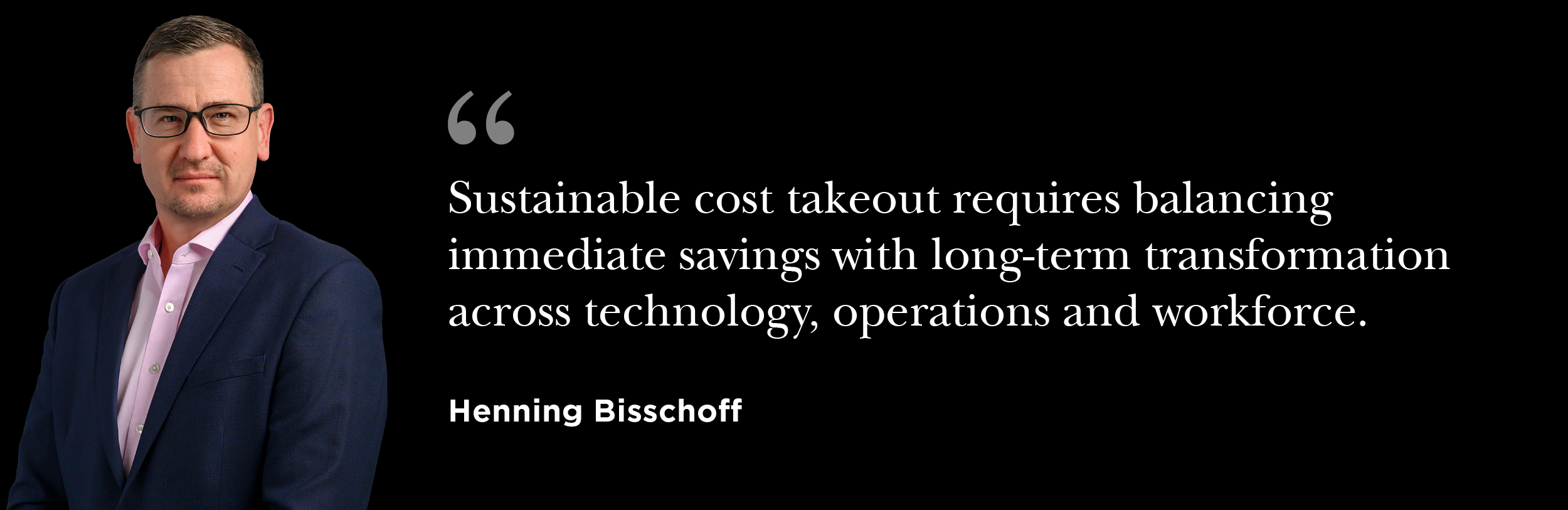
Together, these levers represent a strategic opportunity for firms to rethink cost structures while building a more resilient and future-ready operating model. Beyond operations, firms should explore how AI can enhance productivity within change and transformation functions, improving efficiency across business analysis, delivery and program management.
As cost pressures continue to evolve, broker-dealers that move beyond tactical cost reduction and embrace structural transformation will gain a competitive advantage.
To learn how Capco supports broker-dealers in delivering sustainable cost transformation across the trade lifecycle, please contact our Capital Markets team.